 English
  French
  Dutch
Dutch  German

Governance, Retention & Lifecycle Control
Keeping information forever is not compliance. Deleting information too early is a legal risk.

Effective digital governance requires that information is retained, protected and deleted according to clearly defined rules, with full traceability of every decision. Docbyte Vault is designed to enforce governance policies throughout the entire lifecycle of archived information.
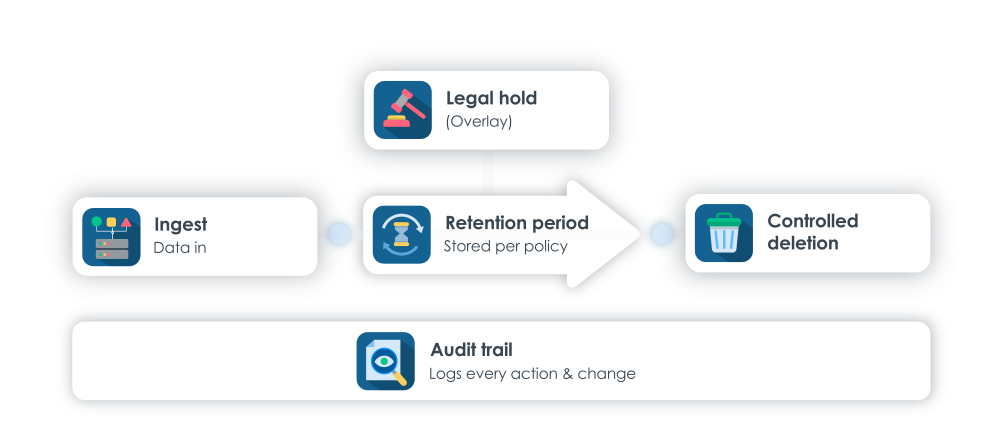
Retention, legal hold and deletion are not manual afterthoughts. They are integral, auditable processes.
These controls become especially important in application retirement, long-term archiving and qualified electronic archiving programmes.
Retention Policies
Docbyte Vault supports policy-based retention aligned with legal, regulatory and organisational requirements.
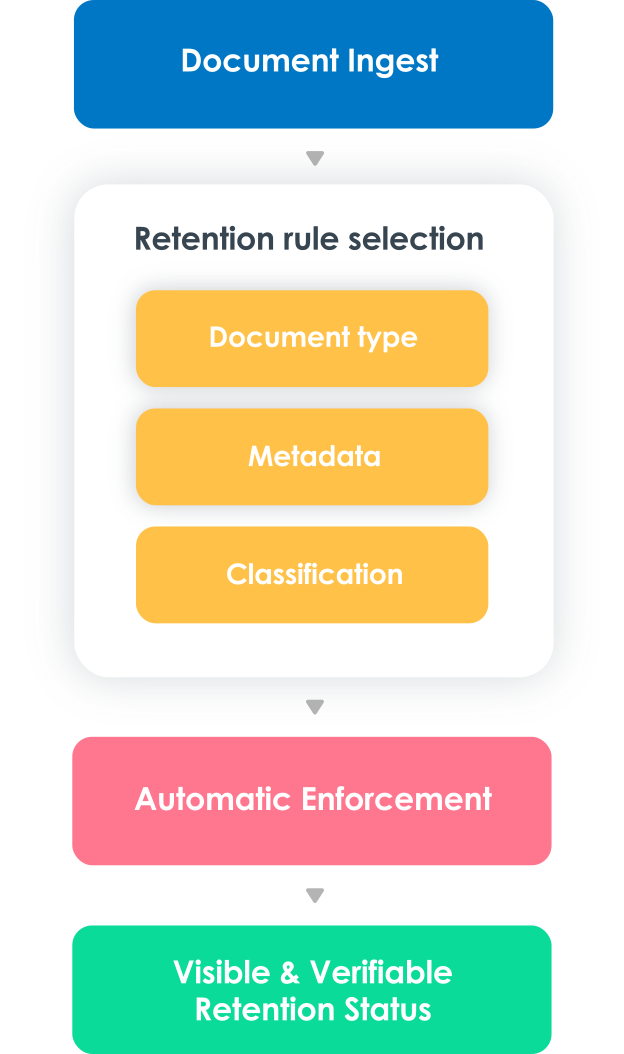
Retention rules can be defined based on document type, context, metadata or classification. Once applied, these rules are enforced automatically, ensuring consistent retention behaviour across large volumes of archived information.
Retention periods are transparent and verifiable, allowing organisations to demonstrate compliance during audits and inspections.
Key capabilities
- Rule-based retention policies
- Automatic enforcement of retention periods
- Alignment with legal and regulatory obligations
- Clear visibility of retention status
Metadata-driven File Plan & Classification
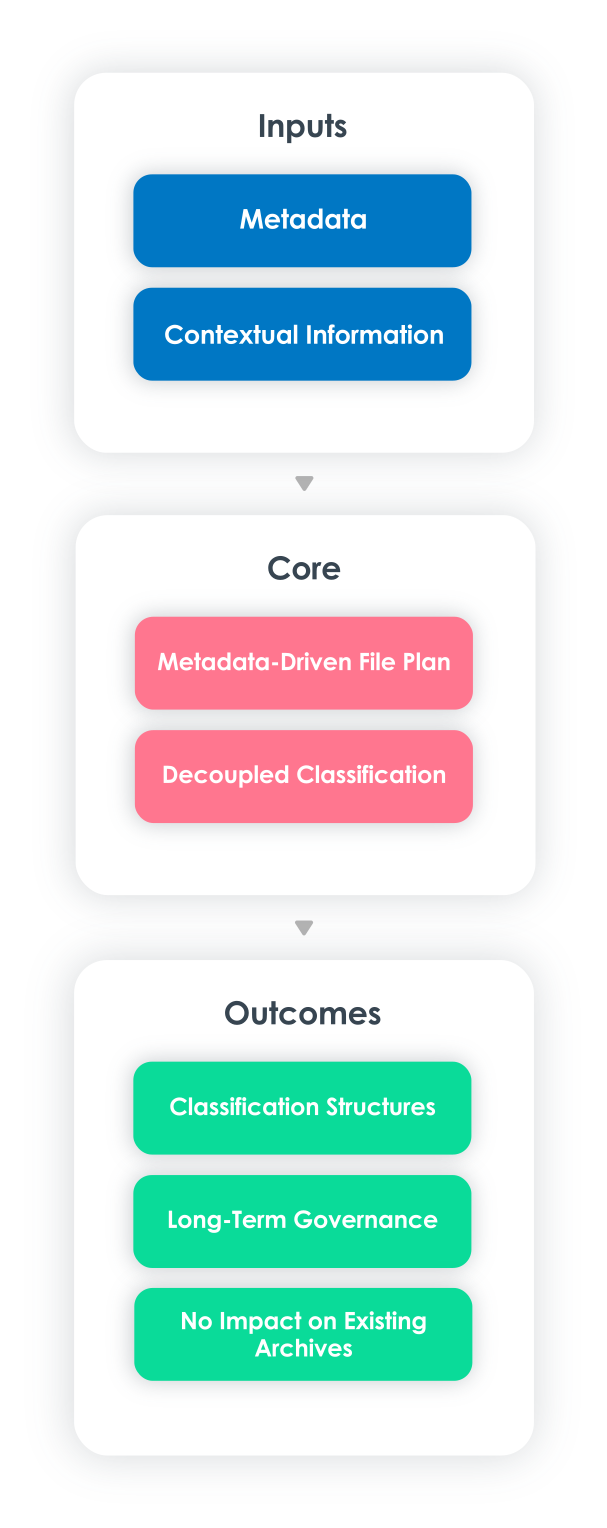
Docbyte Vault uses a metadata-driven file plan that can be configured and adapted over time.
Classification structures are derived from metadata and contextual information, rather than being hardcoded. This allows the file plan to evolve as organisational needs, regulations or designated communities change, without compromising the integrity or evidentiary value of existing records.
By decoupling classification from static structures, Docbyte Vault supports long-term governance in dynamic environments.
Key capabilities
- File plan based on metadata and context
- Evolution of classification structures over time
- No breaking changes to existing archival packages
Related solution
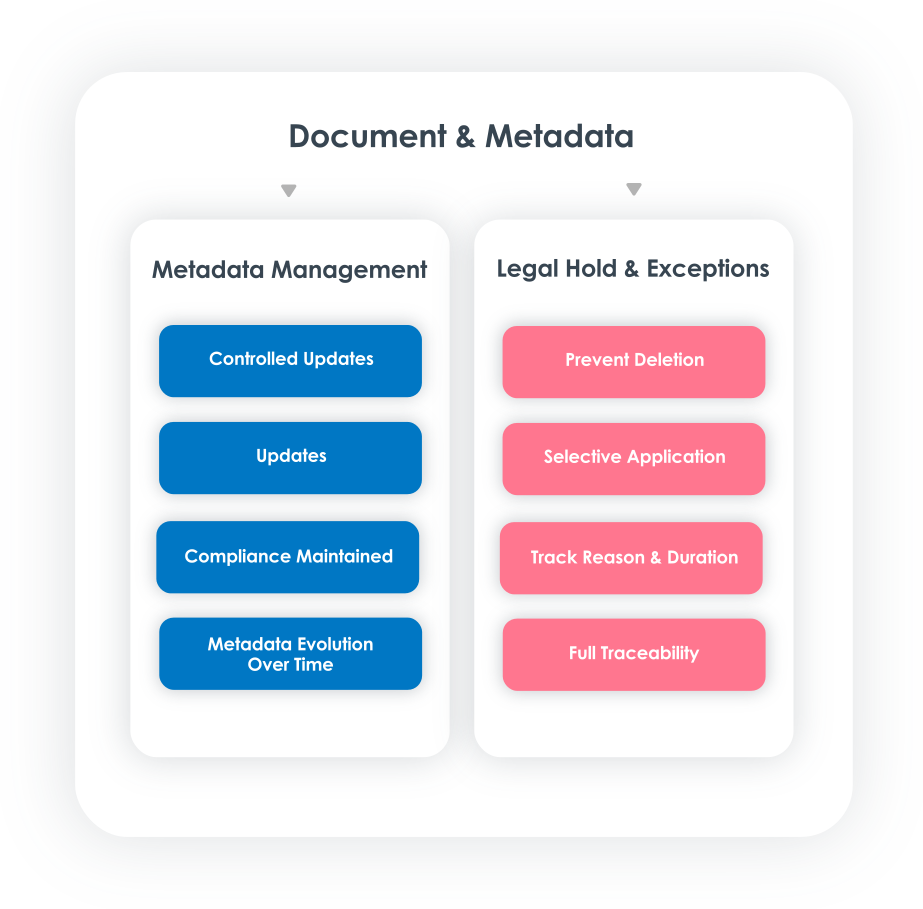
Metadata Management, Schema & Bulk Updates
Controlled metadata management
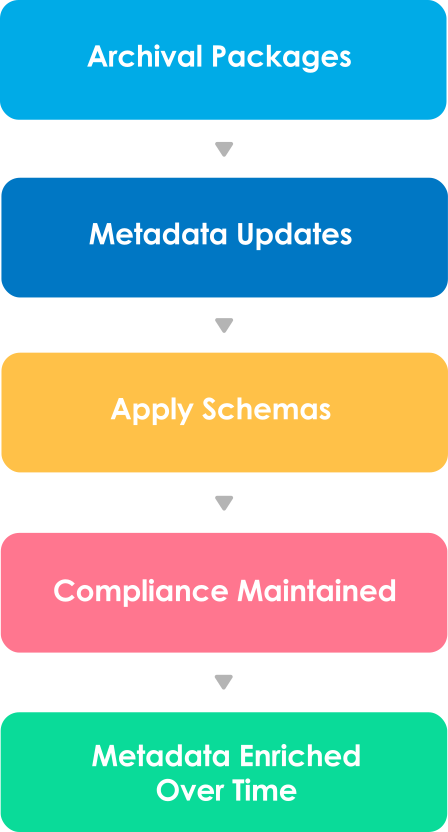
Metadata in Docbyte Vault can be updated in a controlled and compliant manner.
Additional metadata schemas can be applied to existing archival packages, and bulk metadata updates are supported where required. All changes are governed by access controls and auditability requirements, ensuring that metadata evolution does not undermine compliance or evidentiary value.
This allows organisations to enrich, align or correct metadata over time, while maintaining full lifecycle transparency.
Legal Hold & Exceptions
In many scenarios, standard retention rules must be temporarily suspended.
Docbyte Vault supports legal hold mechanisms that prevent deletion when documents are subject to litigation, investigation or regulatory inquiry. Legal holds can be applied selectively and remain in effect until they are explicitly released.
This ensures that relevant information is preserved intact, regardless of standard retention schedules.
Key capabilities
- Suspension of deletion through legal holds
- Selective application to specific documents or sets
- Clear documentation of hold reasons and duration
- Full traceability of exceptions
Controlled Deletion & Proof of Disposal
Deletion is a legally significant act.
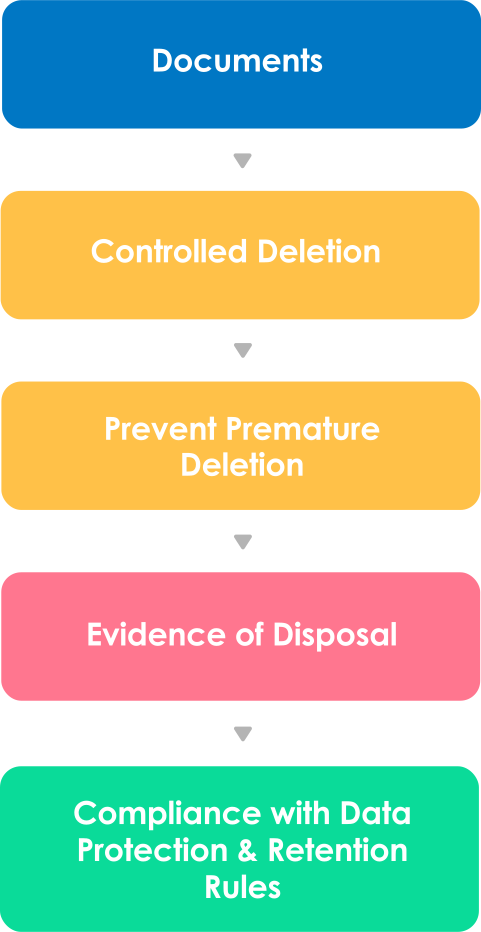
Docbyte Vault ensures that information is deleted only when retention obligations have been fulfilled and no legal holds apply. Deletion processes are controlled, documented and auditable.
Where required, Docbyte Vault can provide evidence that information was deleted correctly and at the appropriate moment. This proof of disposal is essential for demonstrating compliance with data protection and records management regulations.
Key capabilities
- Controlled end-of-life deletion
- Prevention of premature deletion
- Evidence of correct disposal
- Alignment with data protection obligations
Lifecycle Transparency & Auditability
Governance decisions should never be implicit or opaque.
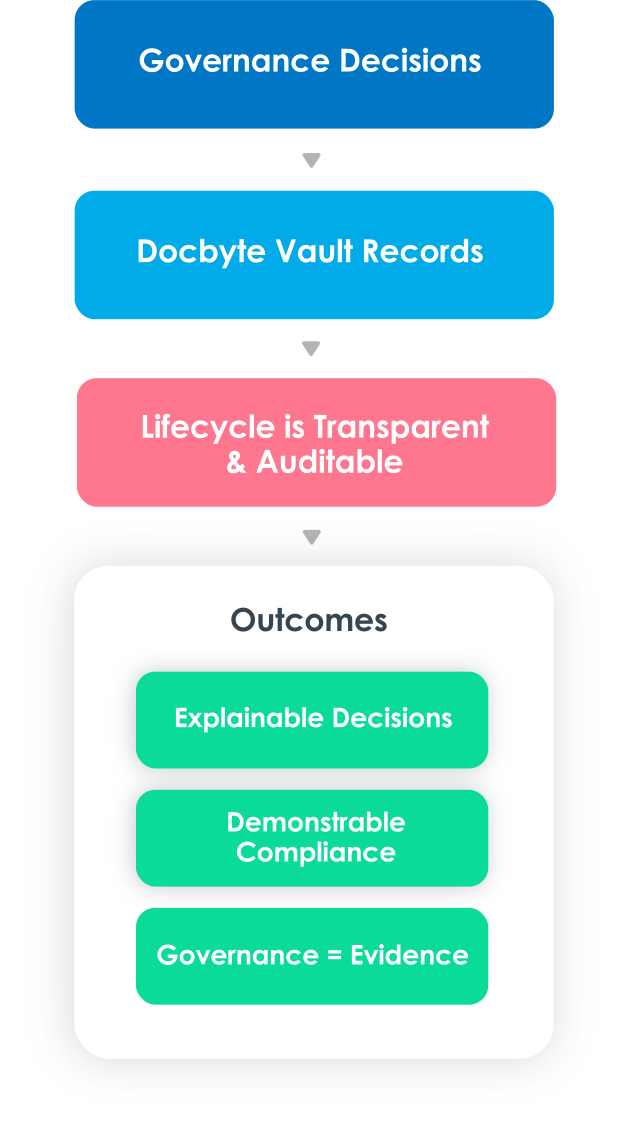
Docbyte Vault maintains a transparent record of retention rules, legal holds, access decisions and deletion events. This ensures that the full lifecycle of archived information can be reconstructed and explained when required.
By making lifecycle control auditable, Docbyte Vault transforms governance from a policy document into an operational reality.
Why this matters
- Decisions can be explained and defended
- Compliance can be demonstrated, not assumed
- Governance becomes part of the evidence chain

Governance as a Foundation for Compliance
Retention, legal hold and deletion are not isolated requirements. They underpin regulatory compliance, legal certainty and trust.
By enforcing lifecycle control through technical mechanisms, Docbyte Vault provides the foundation required for Qualified Electronic Archiving (QeArch) and other regulated use cases.
These aspects are further detailed in the Compliance & Trust section.
Related Use Cases
Life sciences and healthcare
Protect trial master files, medical documentation and compliance records with strict provenance.
Finance and banking
Preserve customer, transaction and contract records to support MiFID II, DORA and internal compliance.
Public Sector
Preserve citizen records, official decisions and statutory documents with secure and long term retention.
HR and corporate
Archive digitally signed employment contracts and corporate records with qualified proof of integrity.