 English
 French
 Dutch
 German


Digital Product Passport archiving
DPP Archiving & Continuity
Every Digital Product Passport needs a usable history, not only a current view.
Docbyte provides an archiving layer for DPP platforms and manufacturers: preserve every DPP version, linked mandatory documents, schema and context, and integrity evidence so authorised users can understand and retrieve the right state over time. The live DPP platform remains the primary service.
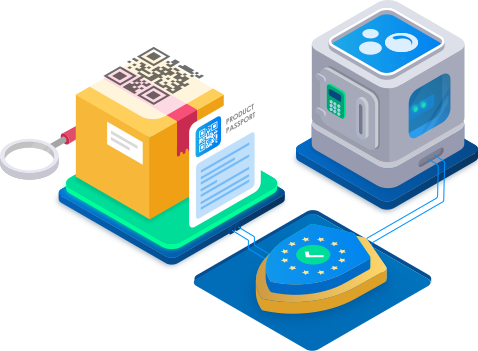
Archiving starts with every DPP version
EN 18221 describes archiving of DPP versions from the first modification and throughout the DPP lifetime.
Docbyte supports this archiving layer by preserving the complete record: the DPP payload, schema and context, linked mandatory documents, identifiers, lifecycle metadata and integrity evidence. The standard recommends OAIS (ISO 14721) as a reference model for archiving.

A DPP archive must preserve the record, not just the proof
A hash or seal can preserve evidence about a DPP object. It is not the complete archived record. A useful archive keeps every DPP version together with its payload, schema, context, linked mandatory documents and integrity evidence. It should also make the historical state valid for a given identifier and point in time understandable and retrievable.
- Are required DPP versions and their linked documents preserved?
- Can the historical state be retrieved by identifier and point in time?
- Is there an independent online retrieval route when continuity is activated?
- Do public, restricted and regulator-only data follow the agreed access rules?
- Is the retention period linked to the relevant product group or lifecycle?
- Is the continuity role and transition route clear to the economic operator?

Preserve every DPP version from the first modification.

Keep the payload, schema, context and linked mandatory documents together.

Preserve integrity evidence, timestamps and preservation events.

Retrieve the historical state valid for an identifier and point in time.

Support documented export and handover to a successor provider.
An archive layer behind the DPP service relationship
Docbyte operates behind the relevant DPP service relationship as an archiving and preservation layer. Retrieval can be delivered through the DPP service provider, or the preserved archive can be transferred to a successor provider. The transfer package is designed to be documented and independently understandable.
What a DPP archive preserves
The archive unit is a complete, versioned DPP record rather than a hash-only evidence object. It combines the payload with the schema and context, linked mandatory documents, identity and lifecycle metadata, access and retention information, and the integrity evidence needed to explain the record over time.

Every DPP version
The DPP payload plus its schema and context, preserved from the first modification and throughout the product lifetime.

Linked mandatory documents
Documents incorporated in or referenced by the DPP, with stable identifiers and version linkage.

Integrity evidence
Hashes, timestamps, electronic seals, validation material and preservation events that explain the record over time.

Identity and lifecycle context
Product and passport identifiers, economic operator, version, lifecycle status and source-system metadata.

Access and retention
The access classification, retention trigger and retention period that apply to the preserved record.

Point-in-time retrieval
The historical DPP state valid for a given identifier and point in time, in a human- and machine-readable package where configured.
For whom is the archive layer?
The same archiving principle supports three distinct roles. Docbyte works behind the relevant DPP service relationship; it does not replace the live DPP service provider.
DPP platforms (main DPP service providers)
Use Docbyte as the archive layer under the platform: preserve versions and linked documents with OAIS-informed packages, integrity evidence and controlled export.
Back-up DPP service providers
Use Docbyte as the archiving and storage layer under the back-up copy.
Manufacturers hosting their own DPP
Archive your own DPP versions and documents.
Keep archiving separate from the DPPSP role
Docbyte’s archive layer can sit under a main DPP service provider, a back-up DPP service provider or a manufacturer hosting its own DPP.
- Keep an independent, preserved DPP continuity copy behind your platform.
- Preserve the agreed lifecycle states and linked documentation.
- Retrieve the correct historical DPP state through a controlled online route.
- Apply the agreed access model to restricted DPP information.
- Define continuity activation, retention and product-group-specific requirements.
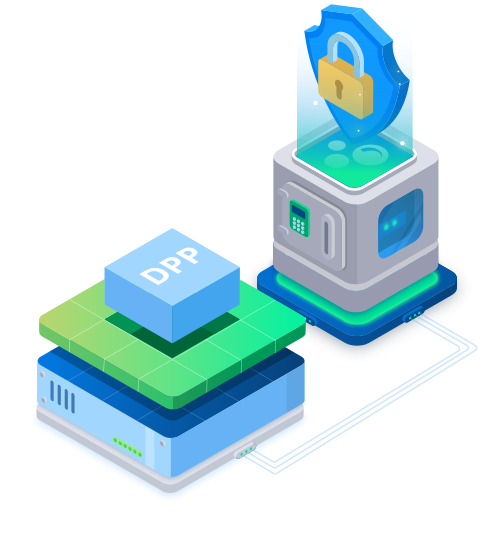
Plan for provider exit and successor handover
An archive should plan for its own future, including the end of the DPP provider relationship. If a DPP provider ceases operation, the preserved archive can be handed over to a successor provider in a documented, independently understandable format. The trigger, rights, access and transfer procedure need to be defined in the service arrangement.
- Reduce reliance on a single live DPP platform.
- Support long-term product and regulatory evidence.
- Prepare for product-lifecycle retention requirements.
- Define authorised access and retrieval paths.
- Keep integrity evidence available when systems change.
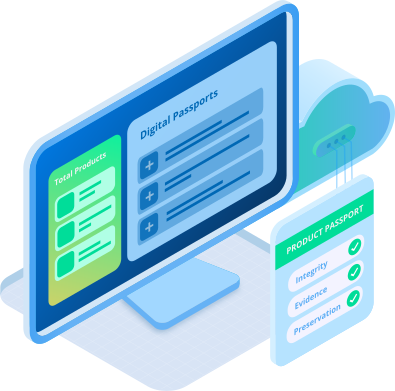
DPP archiving and continuity, scoped to the role
Docbyte combines preservation, integrity evidence, metadata and controlled export in an archive profile for the relevant DPP implementation. The precise retention period, access conditions, retrieval route and successor handover are defined with the customer and the relevant DPP service provider.
- Qualified Trust Service Provider for preservation and electronic archiving.
- Expertise in integrity evidence, auditability and long-term accessibility.
- Preservation-first approach for regulated information.
- API-first integration for DPP platforms.
- Suitable for long retention periods and continuity scenarios.
Frequently Asked Questions
What does DPP archiving preserve?
It preserves every DPP version (payload plus schema and context), linked mandatory documents, identifiers, lifecycle metadata and integrity evidence. The archive profile is designed to support human- and machine-readable retrieval of the relevant state.
Is Docbyte a DPP service provider?
No. Docbyte works behind DPP service providers and manufacturers as an archive and preservation layer. The DPP service provider remains responsible for the live DPP service and its applicable obligations.
Does Docbyte's archive layer fulfil the ESPR back-up-copy obligation?
No. The Article 10(4) back-up copy obligation is fulfilled through a DPP service provider. Docbyte can provide the archiving and storage layer beneath that provider, but does not become the DPPSP merely by preserving the archive.
How does this relate to EN 18221?
EN 18221 §4.2 includes archiving requirements for DPP versions. Docbyte supports that archiving layer and uses OAIS (ISO 14721) as a reference model, as recommended by the standard. The archiving provisions in §4.2 are outside Annex ZA, so this is not a conformity-presumption claim.
What happens if our DPP provider ceases operation?
If a DPP provider ceases operation, the preserved archive can be handed over to a successor provider in a documented, independently understandable format. The trigger, rights, access and transfer procedure must be defined in the service arrangement.
Does DPP archiving replace the live DPP platform?
No. The live DPP platform remains responsible for day-to-day creation, updates and presentation. Docbyte preserves the archive layer behind the relevant provider or manufacturer.
Plan your DPP archiving scope
Talk to Docbyte about the versions, documents, evidence and handover conditions that should support your DPP archiving and continuity architecture.