 English
  French
  Dutch
Dutch  German

When the Business Moves On, the Evidence Must Remain
Regulated data archiving across industries
In regulated industries, business activities rarely stop cleanly.
An insurer may close a book of business. A pharmaceutical company may divest a product. A vehicle platform may reach end of production. A chemical substance may be phased out. A bank may transfer a loan portfolio. A hospital may replace a legacy patient record system. A public authority may decommission an old register.
In each case, the operational activity may end, but the obligation to preserve evidence continues.
The original system, product, portfolio or platform may disappear. Yet the organisation must still be able to prove what happened, which data was used, which decisions were made, which records were communicated and which obligations remain.
That is the real challenge behind regulated data archiving.

Operational closure does not end evidentiary responsibility
Many organisations assume that the main challenge is to switch off the old system. In regulated industries, that is only part of the problem.
The real challenge is to preserve the information that remains legally, operationally or commercially relevant after the original source has disappeared.
That source may be:
- a legacy application
- a product line
- an insurance portfolio
- a clinical trial
- a chemical substance
- a vehicle platform
- a production site
- a loan book
- a public register
- a quality system
- a laboratory system
- a policy administration system
The terminology differs by sector. The underlying challenge is the same. The business moves on. The evidence must remain.
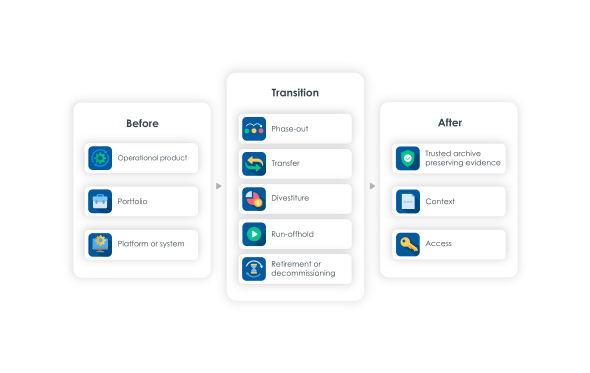

Why “application retirement” is only part of the story
Application retirement is a useful umbrella term. It explains the IT and information governance challenge of ending operational use of a legacy application while preserving the information that still matters.
But business teams often use different words.
Insurance teams may speak about closed books, run-off portfolios or portfolio transfers. Pharma teams may speak about GxP archiving, eTMF archiving, product divestitures or validated system decommissioning. Automotive manufacturers may speak about end of production, type approval records or product liability evidence. Chemical companies may speak about REACH records, SDS archiving and product stewardship. Banks may speak about back-book migration, loan portfolio transfers or servicing transfers.
Different words. Same pattern.
Something stops being operational. The evidence remains relevant.
Application retirement removes the system. Regulated data archiving preserves the evidence that outlives the system.
The same lifecycle appears across regulated industries
Across sectors, the pattern is remarkably consistent.

1. A business object changes status
A product, portfolio, platform, system, site or business line is closed, sold, transferred, phased out or retired.

2. The original system becomes too costly or risky to maintain
It may be obsolete, unsupported, difficult to secure, expensive to licence or dependent on scarce knowledge.

3. Historical data remains relevant
Data may still be needed for audit, litigation, regulatory inspection, customer service, product safety, warranty, claims, tax, quality, compliance or accountability.

4. The organisation must decide what to do with the data
Some data may need to be migrated. Some must be archived. Some may be deleted. Some may be under legal hold. Some may need to be transferred to another owner.

5. A trusted archive becomes the sustainable end state
Archive-only access replaces dependency on obsolete systems while preserving the information, context and evidence that still matter.

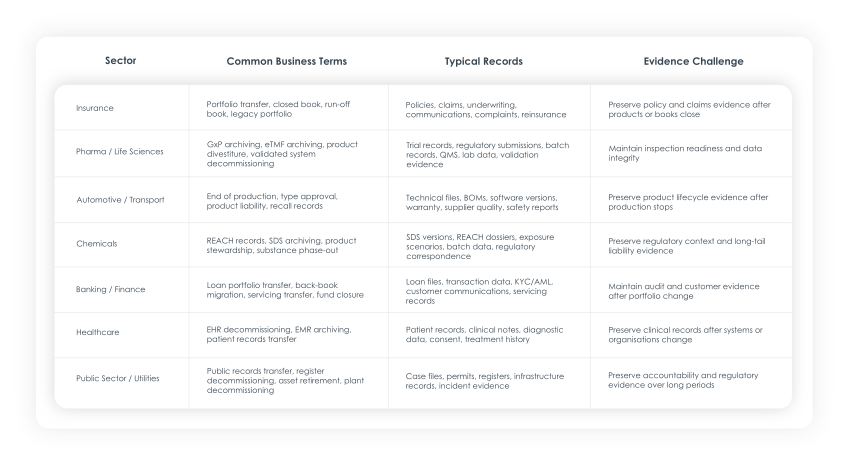
Different sectors, different terminology, same evidence challenge
Each regulated sector has its own language. The table below shows how the same
underlying need appears across industries.
Insurance: portfolio transfers, closed books and run-off portfolios
Insurance is one of the clearest examples of regulated data archiving after business change.
A portfolio may be sold to another insurer. A book of business may be transferred. A product line may be closed for new business. A legacy portfolio may enter run-off. A specialist consolidator may acquire a closed book. A loss portfolio transfer may be used to transfer legacy liabilities.
The terminology used in this sector includes:
- insurance portfolio transfer
- insurance business transfer
- book of business transfer
- closed book
- run-off book
- legacy insurance portfolio
- loss portfolio transfer
- closed-book acquisition
- run-off consolidator
In all these scenarios, operational ownership or activity may change, but historical evidence remains critical.
Insurers need long-term access to:
- policy data
- claims history
- underwriting records
- customer communications
- premium information
- complaints
- reinsurance data
- regulatory correspondence
- audit trails
The challenge is not just to migrate data from one system to another. It is to preserve policy and claims evidence in a way that remains searchable, governed, understandable and defensible after the original policy administration or claims system has been retired.
Insurers should not keep legacy policy or claims systems alive just to access closed-book evidence.
The records involved may include:
- trial master files
- regulatory submissions
- batch records
- laboratory data
- QMS records
- validation evidence
- safety and pharmacovigilance data
- audit trails
- inspection evidence
The central issue is data integrity. Records must remain attributable, legible, contemporaneous, original, accurate, complete, consistent, enduring and available.
The archive must therefore support inspection readiness long after the operational system is no longer in use.
In life sciences, system retirement must preserve inspection readiness and data integrity.
Pharma and life sciences: GxP records beyond system life
In pharmaceutical and life sciences organisations, records often outlive the systems that created them.
A clinical trial may be closed. A product may be divested. A marketing authorisation may be transferred. A validated system may be decommissioned. A LIMS, eTMF, QMS or regulatory system may be replaced. A sponsor transition may occur after a merger, acquisition or product transfer.
The terminology used in this sector includes:
- GxP data archiving
- clinical trial archiving
- eTMF archiving
- product divestiture
- marketing authorisation transfer
- sponsor transition
- validated system decommissioning
- computerised system retirement
- ALCOA++ data integrity
- inspection-ready archiving
Automotive and transport manufacturing: when production stops, liability continues
In automotive, aerospace, rail and transport manufacturing, the end of production does not mean the end of responsibility.
A vehicle model may be discontinued. A platform may be phased out. A supplier may disappear. A plant may close. A PLM, ERP, QMS or warranty system may be retired. Yet the manufacturer may still need to support warranty claims, recalls, safety investigations, type approval questions, spare parts obligations and product liability defence.
The terminology used in this sector includes:
- end of production
- model discontinuation
- platform phase-out
- type approval records
- homologation records
- conformity of production records
- product liability records
- recall records
- warranty claims records
- PLM system retirement
- supplier quality records
- product lifecycle evidence
The records involved may include:
- technical files
- bills of material
- test results
- certificates
- software versions
- supplier documentation
- product safety records
- field incident reports
- warranty evidence
- service bulletins
- production and quality records
This is a powerful archiving use case because the product lifecycle is often much longer than the lifecycle of enterprise systems.
When production stops, liability does not. Product lifecycle evidence must remain trustworthy.
The records involved may include:
- REACH dossiers
- SDS versions
- exposure scenarios
- classification and labelling data
- batch records
- certificates of analysis
- downstream user communications
- regulatory correspondence
- EHS records
- laboratory and quality data
Chemical companies do not only need to preserve documents. They need to preserve regulatory context: which substance, which registration, which classification, which SDS version, which customer, which country, which use, which exposure scenario and which decision applied at a given point in time.
In chemicals, the archive must preserve not just documents, but regulatory context.
Chemicals: REACH, SDS, product stewardship and long-tail liability
The chemical industry has its own vocabulary, but the same pattern appears.
A chemical product may be phased out. A substance may become restricted. A product line may be divested. A plant may close. A REACH registration may need to be transferred. Historical SDS versions may remain relevant for downstream users, incidents, audits, litigation or regulatory review.
The terminology used in this sector includes:
- product stewardship
- REACH records retention
- SDS archiving
- safety data sheet archiving
- chemical safety report archiving
- regulatory dossier transfer
- substance phase-out
- product discontinuation
- chemical business divestiture
- LIMS archiving
- EHS system retirement
- long-tail chemical liability
Banking and financial services: back books, servicing transfers and portfolio evidence
In financial services, similar scenarios appear around loan books, mortgage servicing, fund closures, pension transfers and back-book migrations.
A loan portfolio may be sold. Servicing may be transferred. A fund may be closed or merged. A pension book may be transferred. A banking product may be discontinued. A legacy core banking platform may be retired.
The terminology used in this sector includes:
- loan portfolio transfer
- mortgage servicing transfer
- back-book migration
- closed book banking
- loan file retention
- fund closure
- fund manager transition
- pension risk transfer
- mandate termination
- core banking decommissioning
The records involved may include:
- loan files
- customer correspondence
- servicing records
- transaction evidence
- KYC and AML history
- complaints
- contractual evidence
- product documentation
- regulatory reports
- audit trails
The archiving requirement is driven by customer obligations, regulatory audit, legal evidence, complaint handling, tax, AML/KYC history and transaction accountability.
Financial institutions need archive-only access to historical records after portfolios, products or servicing responsibilities change.
The records involved may include:
- patient records
- clinical notes
- consent data
- diagnostic evidence
- treatment history
- referrals
- discharge summaries
- audit trails
- billing and reimbursement records
The sensitivity of health data makes governance especially important. Access must be controlled, retention rules must be respected and the archive must preserve both the record and the context in which it was created.
Legacy clinical systems may disappear, but patient record obligations continue.
Healthcare: patient records after systems or organisations change
In healthcare, the terminology is often less about portfolio transfer and more about patient record continuity, EHR decommissioning and long-term medical record retention.
A hospital may merge. A medical practice may close. A legacy EHR or EMR system may be replaced. Patient records may need to be transferred. Historical clinical data may remain relevant for care continuity, legal evidence, reimbursement, audit or regulatory requirements.
The terminology used in this sector includes:
- EHR decommissioning
- legacy EMR archiving
- patient records transfer
- medical records retention
- healthcare data archiving
- hospital merger records management
- practice closure records retention
Public sector and utilities: accountability over long periods
Public sector organisations and utilities often manage records that remain relevant for many years, sometimes decades.
A public register may be decommissioned. A government agency may be reorganised. A service may be outsourced or insourced. A plant may be closed. Infrastructure assets may be retired. A utility may need to preserve technical, operational and regulatory evidence long after the original system has changed.
The terminology used in this sector includes:
- public records transfer
- government register decommissioning
- digital preservation
- machinery of government change
- transfer of functions
- utility asset retirement
- plant decommissioning
- regulatory evidence retention
- infrastructure records preservation
The records involved may include:
- public records
- permits
- case files
- citizen communications
- inspection records
- infrastructure documentation
- maintenance records
- incident evidence
- regulatory filings
- environmental records
In these sectors, the archive supports accountability, transparency, regulatory compliance and long-term public or infrastructure responsibility.
Public and infrastructure records often outlive the systems and organisations that created them.
From system-centric retirement to evidence-centric preservation
Traditional application retirement is often framed as an IT cost-reduction programme. The objective is to eliminate licences, infrastructure, support costs and security risk.
That objective is valid, but incomplete.
In regulated industries, retirement must be evidence-centric.
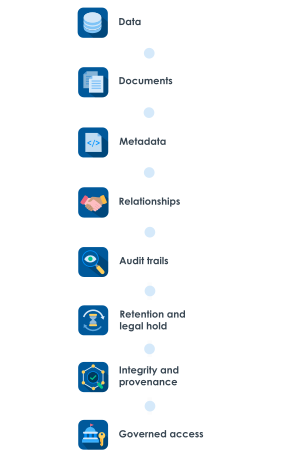
The archive must preserve not only the data, but also the meaning of the data.
This includes:
- original records and files
- structured data
- metadata
- relationships between records
- business context
- audit trails
- retention rules
- access controls
- legal holds
- validation evidence
- integrity checks
- provenance
- evidence of migration or transformation
Without that context, old data becomes a liability. It may technically exist, but it can no longer be trusted, interpreted or defended.
The goal is not merely to shut down the system. The goal is to preserve evidence in a way that remains trustworthy, governed and accessible.
Why keeping legacy systems alive is not a strategy
Many organisations keep legacy systems running because someone may still need the data.
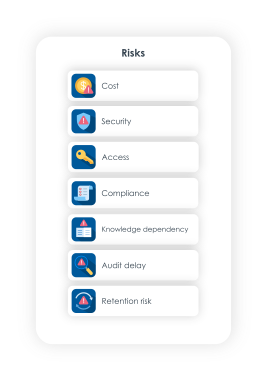
This creates hidden risk:
- obsolete software remains in production
- unsupported databases remain accessible
- old user accounts and privileged access remain active
- security controls are weaker than in modern environments
- knowledge depends on a few people
- infrastructure and licence costs continue
- audit access is slow and inconsistent
- retention and deletion are difficult to enforce
- regulatory access depends on systems that were not designed for long-term evidence preservation.
Keeping a system alive only for historical access is usually a sign that the organisation does not yet have a trusted archival strategy.
Why full migration is not always the answer
The opposite mistake is to migrate all historical data into a new operational system.
This can create other problems:
- the new system becomes overloaded with inactive data
- historical data does not fit the new data model
- context is lost during transformation
- regulatory evidence is weakened
- migration costs rise sharply
- retention rules become harder to enforce
- old data contaminates new operational processes
- unnecessary personal or sensitive data remains active
For inactive, closed, transferred or historical data, archive-only access is often better than full operational migration.
Migration is for active data. Trusted archiving is for historical evidence.
Docbyte Vault: trusted preservation for regulated data and records
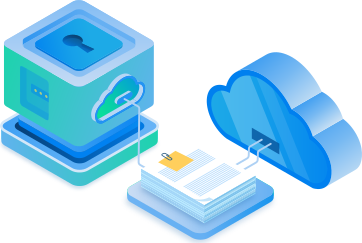
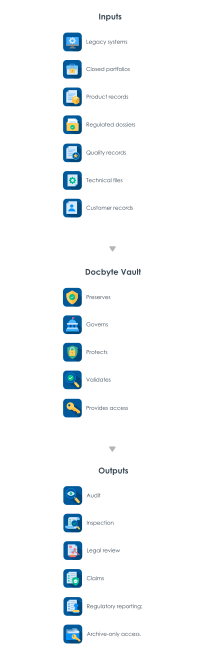
Docbyte Vault provides a trusted preservation layer for regulated data and records after products, portfolios, platforms, business lines or systems have been retired, transferred, phased out, sold, closed or decommissioned.
It helps organisations preserve:
- structured data
- documents
- metadata
- relationships
- business context
- audit trails
- retention rules
- legal holds
- provenance
- integrity evidence
- controlled access
Docbyte Vault helps organisations:
- retire legacy applications without losing access to critical information
- preserve evidentiary value after operational systems disappear
- support audit, inspection, litigation, claims and regulatory review
- enforce retention and legal hold
- provide controlled access to authorised users
- reduce dependence on obsolete systems
- maintain trust in historical records over time
The value is not only technical. It is legal, operational, regulatory and strategic.
Docbyte Vault allows organisations to move on without losing the evidence they may still need.
How this terminology appears in regulated industries

Need the terminology first?
This page shows how regulated data archiving appears across industries. If you want a clear explanation of the terminology behind application retirement, decommissioning, sunsetting, phase-out, migration, archiving, disposition and archive-only access, read the first guide in this series.
Frequently Asked Questions
What is regulated data archiving?
Regulated data archiving is the preservation of data, records, metadata, relationships and evidence in a way that supports legal, regulatory, audit, operational or compliance obligations over time.
Why is application retirement different in regulated industries?
In regulated industries, historical data often remains relevant after the original system, product or portfolio is no longer active. The organisation must preserve not only the data, but also its context, integrity, provenance and evidentiary value.
What is archive-only access?
Archive-only access allows authorised users to consult historical information through a governed archive instead of keeping the original legacy system online.
Why not migrate all historical data into the new system?
Historical data often does not fit the new system’s data model and may no longer be operationally active. Migrating everything can increase cost, complexity, privacy risk and data quality issues. Trusted archiving is often better for inactive or evidentiary data.
Which industries need regulated data archiving?
Industries with long retention, audit, legal or product liability requirements often need regulated data archiving. This includes insurance, pharma, life sciences, automotive, chemicals, banking, healthcare, public sector, utilities and transport manufacturing.
What is product lifecycle evidence?
Product lifecycle evidence includes the records needed to prove how a product was designed, produced, tested, approved, maintained, serviced or changed over time. It is especially important in automotive, aerospace, medical devices, chemicals and other regulated manufacturing sectors.
What is the link between closed books and application retirement?
A closed book may no longer generate new business, but its historical records still need to be accessed and governed. Application retirement becomes possible when the policy, claims and customer evidence is preserved outside the legacy system.
How does Docbyte Vault support regulated data archiving?
Docbyte Vault preserves structured data, documents, metadata, relationships, audit trails, retention rules, legal holds, provenance and integrity evidence in a governed archive. This allows organisations to reduce dependency on obsolete systems while maintaining access to trustworthy records.
Retiring a product, portfolio or legacy system?
Before the source system disappears, make sure the data, records, metadata, relationships, audit trails and evidence are preserved. Docbyte Vault helps organisations move from legacy system dependency to trusted archive-only access.
Docbyte Vault helps regulated organisations move from legacy system dependency to trusted archive-only access.