 English
  French
  Dutch
Dutch  German

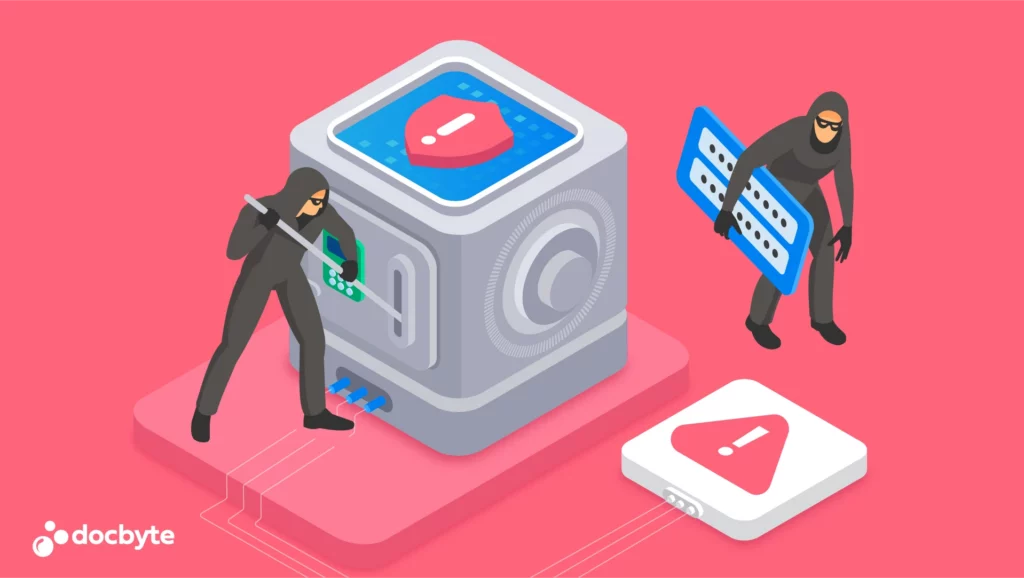
Picture this: a healthcare provider discovers that attackers have accessed their archive containing fifteen years of patient records, surgical notes, and billing information. The breach went undetected for eight weeks. By the time it was discovered, the attackers had exfiltrated sensitive data, modified audit trails, and deployed ransomware across backup systems.
The cost of containment, notification, and remediation exceeded €2 million. The real damage, though, was less visible; patient trust eroded, regulatory fines followed, and the organisation faced questions it could not easily answer: How did they get in? What exactly was stolen? When was the data accessed?
This is not a hypothetical scenario. Archive breaches are happening now, and they are typically more devastating than breaches of operational systems because archives contain years of evidence, legal records, and sensitive history all in one place.
The Uncomfortable Truth: Archives Are Now a Primary Target
For decades, many organisations treated archives as a compliance checkbox. A place to park finished information. Cold storage. This mental model is dangerously outdated.
From an attacker’s perspective, an archive is a treasure chest. It contains:
- Signed contracts and legal evidence
- HR records and identity data
- Financial documents and transaction histories
- Regulated records with multi-decade retention periods
- Audit trails and metadata describing your internal operations
Attackers know this. They are actively hunting for weak archives because the payoff is enormous: they can exfiltrate sensitive data, modify evidence to cover their tracks, disrupt your compliance audits, and hold you hostage with ransomware. An archive breach is not just a confidentiality incident. It is a trust incident.
Why Legacy Archives Are Weak: Five Failure Modes
1. Identity and Access Controls Are Behind Modern Standards
Legacy archiving systems were built for a different era. They often lack single sign-on (SSO) integration, meaning employees manage separate credentials. Role separation is coarse; permissions are granted in broad categories rather than granular policies. There is little enforcement of least privilege. Many systems grant read access to entire document classes with no way to restrict access to specific records or time periods.
Once an attacker gains a foothold (through phishing, credential stuffing, or compromised VPN access), the archive becomes trivially easy to browse and export in bulk. A legacy archive with weak access controls is a buffet.
2. Monitoring Is Minimal and Logging Is Not Investigation-Ready
Many archive systems log activity, but not in a way that helps during an incident. Logs may be incomplete, stored locally without central aggregation, or lack the detail needed to reconstruct a timeline. There is often no alerting on suspicious patterns: bulk downloads, access from unusual locations, or after-hours activity. There are no baseline models of normal behaviour against which to measure anomalies.
The result is predictable: breaches go undetected for weeks or months. When discovery finally happens (often because an attacker tips off a regulator or demands ransom), your organisation cannot answer basic questions. What was accessed? When? By whom? What was exfiltrated? How long were they in the system? Incident response becomes a nightmare.
3. Backups Exist, but They Are Not Resilient to Ransomware
Many organisations back up their archives, but the backups are not protected against ransomware. If an attacker obtains archive credentials, they can often access the backup systems with the same credentials or find the backups stored nearby with minimal segmentation. Immutable snapshots, which would survive ransomware, are rare. Testing restore procedures is even rarer, so when disaster strikes, recovery is slow or impossible.
Ransomware operators know this. They encrypt the production archive and then destroy or encrypt the backups. Your organisation is forced to choose between paying the ransom or suffering extended downtime and potential permanent data loss.
4. Patch and Vulnerability Management Cycles Are Slow
Legacy archiving platforms have lengthy upgrade cycles and painful maintenance windows. Dependencies are hard to patch. In the meantime, known vulnerabilities linger in production. Attackers scan for these known weaknesses routinely. If your archive runs outdated software with publicly disclosed vulnerabilities, you are an easy target.
Modern SaaS platforms and Zero Trust architectures patch continuously and transparently. Legacy archives patch once a year, if they patch at all.
5. “It Is an Archive” Becomes an Excuse for Poor Operational Hygiene
Archives often live on the fringes of an organisation’s security programme. Ownership is unclear. Budgets are minimal. Security reviews happen infrequently, if at all. The archive drifts outside the organisation’s evolving security posture while the enterprise security team focuses on operational systems and the latest threat landscape.
This neglect is catastrophic. The archive becomes a security blind spot. No one knows what is in it, who has access, or how it is monitored. It is the perfect hunting ground for a persistent attacker.
What Attackers Can Do With a Compromised Archive
The impact of an archive breach extends beyond confidentiality. It affects integrity, availability, and trust.
- Confidentiality: Exfiltrate sensitive documents, blackmail executives, find historical data that was intentionally deleted from operational systems
- Integrity: Modify metadata, tamper with audit trails, plant forged documents into your archive to undermine trust or create false evidence
- Availability: Encrypt or delete archived datasets, disrupt your ability to retrieve records during regulatory audits or litigation
In short: a hacked archive can break trust in your organisation’s entire records. It is not merely a compliance failure or a financial loss. It is a reputational catastrophe.
A Better Model: Five Principles for an Evidence-Grade Archive
The good news is that you can build and operate an archive that is as secure as any critical operational system. It requires a shift in mindset and some concrete design changes.
1. Modern Identity Controls and Least Privilege
Your archive must integrate with your organisation’s identity provider via SSO and multi-factor authentication (MFA). Role-based access control should be granular, not coarse. Users should be able to access specific document sets with time-bound, context-aware permissions. Privileged operations (like deletion or metadata modification) should require additional approval. This is table stakes for modern security.
2. Comprehensive, Searchable Audit Trails
Every access, download, modification, and administrative action must be logged with full context: user identity, timestamp, source IP, action type, affected records, and outcome. These logs should be immutable and centralised. They should be queryable and exportable for incident investigation. Alerts should trigger on suspicious patterns: bulk downloads, access from unusual locations, or after-hours administrative actions. An archive without investigation-ready logs is not an archive; it is a liability.
3. Integrity Controls and Tamper Detection
Archives must enforce immutability where it matters. Once a document is archived, its content should not change; metadata might be added, but the original bytes should be cryptographically signed and verifiable. Deletion should be rare and auditable. Hash-based integrity checks should run continuously to detect silent corruption or tampering. Your archive should be able to prove, at any point in time, that a document has not been modified since it was stored.
4. Ransomware-Resilient Backups
Backups must be immutable and offline or air-gapped from production credentials. Snapshots should be taken regularly and retained for extended periods. Restore procedures should be tested regularly, not just documented. If ransomware strikes, you should be able to restore your archive quickly without paying a ransom.
5. Continuous Patching and Vulnerability Management
Your archive platform should be patched automatically or on a predictable, frequent schedule. Dependencies should be up to date. Vulnerability assessments should happen regularly. The archive should be part of your security operations centre (SOC) monitoring and incident response workflows, not a forgotten corner of your infrastructure.
How Docbyte Vault Addresses These Challenges
Docbyte Vault is purpose-built to tackle the security challenges that plague legacy archives. As a European Qualified Trust Service Provider, Docbyte combines advanced digital archiving and preservation with security controls designed for today’s threat landscape.
Modern Identity and Access Control: Docbyte Vault integrates seamlessly with your organisation’s SSO and MFA systems. Role-based access control is granular, context-aware, and audit-friendly. Privileged operations are logged and can require approval workflows.
Investigation-Ready Audit Trails: Every interaction with your archive is logged with full context and stored immutably. The audit trail is searchable, exportable, and integrated with your SIEM. You can reconstruct what happened in a breach with precision.
Integrity and Tamper Detection: Docbyte Vault enforces immutability where it counts. Documents are cryptographically signed. Continuous integrity verification ensures that no data has been silently modified.
Ransomware Resilience: Backup and restore capabilities are built into Docbyte Vault with immutable snapshots and proven recovery procedures. Your archive can survive ransomware.
Continuous Security Updates: As a managed service, Docbyte Vault is patched continuously. You never have to worry about legacy vulnerabilities lingering in production.
Docbyte Vault transforms your archive from a security liability into a security asset. It is built to be an evidence-grade, audit-ready system from the ground up.
Is Your Archive at Risk? A Self-Check
If you answer “no” or “unsure” to any of these questions, your archive is at risk.
- Can you guarantee that every access to your archive is logged with full context, and can you search those logs within minutes to answer “Who accessed this document on this date?”
- Is your archive integrated with SSO and MFA, and do you enforce the principle of least privilege with granular role-based access control?
- Can you prove that archived documents have not been modified since they were stored, and do you run continuous integrity checks?
- Are your backups immutable and physically or logically separated from your production archive, and have you tested a full restore in the past year?
- Is your archive patched on a predictable, frequent schedule, and is it monitored by your security operations centre as a critical asset?
Conclusion: Archives Are Not Passive
An archive is not a passive repository. It is a long-term, high-value, high-risk system that attackers are actively hunting. If your archive is built primarily for “storage of legacy information” and not for security, you should assume it is one of the weakest links in your organisation.
The good news is that this is fixable. Modern archiving solutions like Docbyte Vault combine preservation and compliance with evidence-grade security controls. You can build an archive that is as trustworthy and secure as any operational system, and you can prove it to auditors, regulators, and your customers.


